
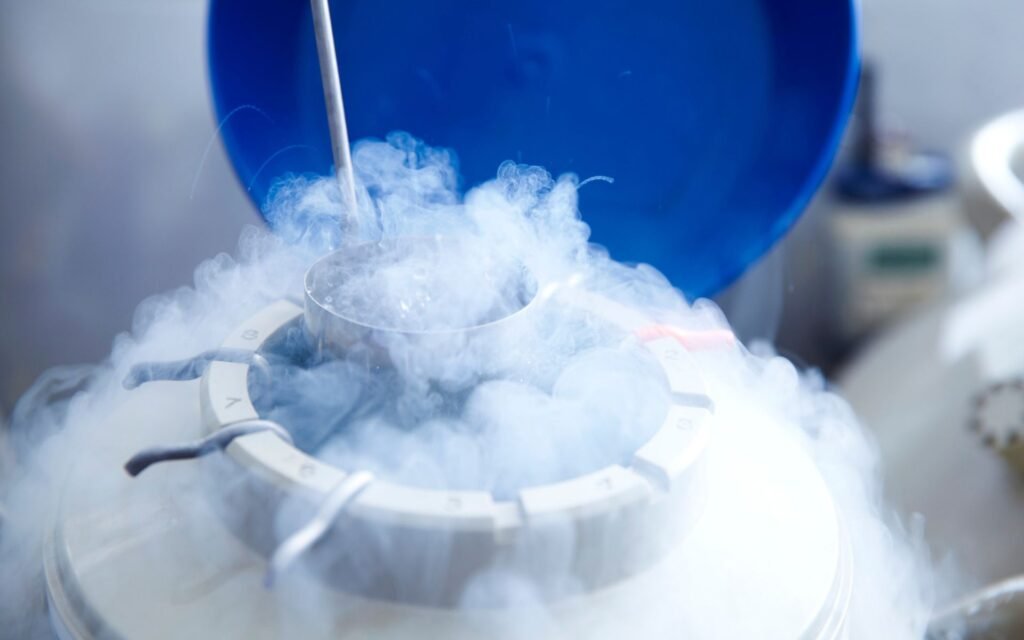
Cryopreservation has become an important part of modern fertility care. It allows eggs, sperm and embryos to be preserved at very low temperatures for future use. For people planning fertility treatment, undergoing medical treatment that may affect fertility, delaying pregnancy, or completing an IVF cycle, fertility preservation can provide additional reproductive options.
Many couples searching for egg freezing in Bathinda, sperm freezing in Bathinda, or embryo freezing in Bathinda have an important question: how long can eggs, sperm and embryos actually remain frozen?
The answer is more nuanced than simply assigning a fixed number of years. Properly frozen reproductive cells and embryos can potentially remain preserved for many years because cryopreservation essentially pauses biological activity. However, the permitted storage period, renewal requirements, regulations, clinic policies and the person’s individual circumstances can vary.
What Is Cryopreservation?
Cryopreservation is a laboratory technique used to preserve biological material at extremely low temperatures. In fertility treatment, it can be used for eggs, sperm and embryos.
Modern fertility laboratories commonly use a technique called vitrification for freezing eggs and embryos. Vitrification involves very rapid cooling and specialized cryoprotective solutions. The goal is to reduce the formation of damaging ice crystals inside cells.
Sperm can also be cryopreserved using carefully controlled laboratory procedures. Once successfully frozen and stored in appropriate conditions, reproductive material can remain in a stable state until it is required.
This technology is particularly relevant to fertility preservation, IVF treatment, donor programs and fertility planning.
How Long Can Frozen Eggs Be Stored?
Frozen eggs can potentially be stored for many years when maintained under appropriate cryogenic conditions. There is not necessarily a biological expiry date that causes a properly frozen egg to suddenly become unusable after a particular number of years.
The important distinction is between biological storage capability and legal or clinic-approved storage duration.
Eggs are generally frozen using vitrification. After freezing, they are stored in specialized cryogenic storage systems. When the eggs are needed, they can be warmed in the laboratory and assessed before fertilization.
The length of storage may therefore depend on factors such as local regulations, consent documentation, storage agreements and clinic policies.
For women considering egg freezing in Bathinda, a fertility specialist can explain the expected storage process, consent requirements and future-use procedures.
Does the Age of the Egg Change While It Is Frozen?
One of the major advantages of egg freezing is that the egg’s biological age does not continue progressing while it is stored.
For example, an egg frozen at a younger age remains an egg from that stage of reproductive life. Freezing does not make the egg biologically older during storage.
However, this does not mean that future pregnancy is guaranteed. The woman’s age at the time of pregnancy, uterine health, overall health and other factors can still be relevant.
The quality of the egg at the time it is frozen is also important. Generally, fertility preservation is considered earlier in reproductive life because egg quantity and quality naturally change with age.
How Long Can Frozen Sperm Be Stored?
Sperm can also be preserved for extended periods in appropriate cryogenic storage.
Men may consider sperm freezing before treatments or procedures that could affect fertility. It may also be considered for fertility preservation, certain medical conditions, occupational circumstances, or before fertility treatment when appropriate.
Once sperm has been properly frozen and stored, the biological activity of the sperm is essentially paused. The sperm does not continue aging in the same way that unfrozen cells do.
When needed, a stored sperm sample can be thawed and assessed. Depending on sperm quality and the treatment plan, the sample may potentially be used for procedures such as IUI or IVF/ICSI.
Can Sperm Be Frozen for Many Years?
Yes, sperm can remain stored for many years under appropriate conditions.
There are reports of successful pregnancies using sperm that had been cryopreserved for extended periods. However, the length of storage permitted in practice depends on applicable regulations, consent, storage arrangements and clinic policies.
People considering long-term sperm freezing in Bathinda should ask the fertility clinic about storage duration, renewal procedures, sample identification, consent and future use.
How Long Can Embryos Be Frozen?
Embryos can also be cryopreserved for extended periods. Modern embryo freezing commonly uses vitrification, which allows embryos to be cooled rapidly and stored in cryogenic conditions.
Embryo freezing is widely used during IVF treatment. If multiple suitable embryos are created during an IVF cycle, some may be frozen for potential future transfer.
A frozen embryo does not continue developing while it remains stored. Its biological activity is effectively suspended during cryogenic preservation.
As with eggs and sperm, the actual permitted storage period depends on the relevant laws, regulations, consent requirements and clinic policies.
Why Are Embryos Frozen After IVF?
There are several situations in which embryo freezing may be considered.
A couple may have additional suitable embryos after an IVF cycle and choose to preserve them for future treatment. In some situations, the fertility specialist may recommend delaying embryo transfer for medical or treatment-planning reasons.
Embryos may also be frozen when a freeze-all strategy is planned, when genetic testing requires time before transfer, or when the clinical team believes a later frozen embryo transfer may be appropriate.
Embryo freezing can therefore provide flexibility in IVF treatment planning.
Does Long-Term Freezing Damage Eggs, Sperm or Embryos?
Cryopreservation is designed to minimize cellular damage during freezing and warming.
The freezing process itself is one of the most critical stages. With modern vitrification, rapid cooling helps reduce the formation of ice crystals that can damage cells.
However, not every egg, sperm sample or embryo will necessarily survive the warming process. Survival and subsequent performance can depend on the type of biological material, its condition before freezing, the laboratory process and other factors.
For this reason, fertility treatment should always be discussed with a qualified fertility specialist and performed in an appropriately equipped laboratory.
What Happens When Frozen Eggs Are Needed?
When a woman decides to use her frozen eggs, the eggs are carefully warmed in the laboratory.
After warming, the laboratory team evaluates whether the eggs have survived the process appropriately. Suitable eggs may then be fertilized, commonly through ICSI, where a sperm is injected directly into an egg.
The resulting embryos may be cultured in the laboratory and assessed before a transfer is considered.
The number of eggs available, the woman’s age when the eggs were frozen, sperm quality, embryo development and other factors can influence the overall outcome.
What Happens When Frozen Sperm Is Needed?
When frozen sperm is required, a stored sample is carefully thawed.
The laboratory may assess parameters such as sperm survival and motility. Depending on the treatment plan, the sample may be prepared for IUI or used for IVF/ICSI.
For men with very low sperm counts or specific male infertility conditions, ICSI may be considered because it allows an individual sperm to be selected and injected into an egg.
Therefore, sperm freezing can become an important component of male fertility preservation and fertility treatment.
What Happens When a Frozen Embryo Is Needed?
A frozen embryo transfer, often called FET, involves warming a previously cryopreserved embryo and transferring an appropriate embryo into the uterus.
The woman’s uterine lining is prepared according to the treatment plan. This can involve a natural cycle or medication-assisted preparation depending on individual circumstances.
The embryo is then warmed in the laboratory. If it meets the required criteria after warming, the embryo transfer can be performed.
Not every frozen embryo necessarily survives warming, although modern vitrification has improved survival rates considerably compared with older freezing methods.
Does the Storage Time Affect IVF Success?
Storage duration alone is not necessarily the most important factor determining IVF outcome.
Other factors can have a much greater influence, including the age of the woman when the eggs or embryos were created, egg quality, sperm factors, embryo quality, uterine health and the reason for fertility treatment.
For example, an embryo created several years earlier may still retain its developmental characteristics from the time it was created. The fact that it has been stored does not mean that the embryo itself has continued aging during that period.
This is one reason cryopreservation can be valuable for fertility planning.
Egg Freezing vs Embryo Freezing
Egg freezing and embryo freezing are both fertility preservation options, but they are different.
With egg freezing, unfertilized eggs are preserved. The woman retains greater flexibility regarding the future use of those eggs because fertilization occurs later.
With embryo freezing, the egg has already been fertilized and developed into an embryo before cryopreservation.
The appropriate option depends on personal circumstances, reproductive plans, relationship status, medical considerations and fertility goals.
A fertility specialist can explain the advantages and limitations of each option during a fertility consultation.
Who May Consider Fertility Preservation?
Fertility preservation may be considered by different groups of people.
Women who want to preserve reproductive options for the future may consider egg freezing. Men who may experience a future decline in fertility or are undergoing certain medical treatments may consider sperm freezing.
People preparing for cancer treatment may also discuss fertility preservation before treatment begins because some cancer therapies can affect reproductive function.
Couples undergoing IVF may choose embryo freezing when suitable embryos are available.
The decision should always be individualized after discussing age, reproductive health, future plans and medical circumstances with a fertility specialist.
Fertility Preservation Before Cancer Treatment
Cancer treatment can sometimes affect fertility. Chemotherapy, radiation therapy and certain surgeries may have an impact on reproductive function.
For this reason, people diagnosed with cancer who may want biological children in the future should discuss fertility preservation as early as possible with their oncology and fertility teams.
Depending on the person’s situation, options may include egg freezing, sperm freezing or embryo freezing.
Timing can be particularly important because fertility preservation may need to be planned before certain treatments begin.
Why Storage Conditions Matter
Long-term cryopreservation requires carefully controlled storage conditions.
Eggs, sperm and embryos are stored in specialized cryogenic systems. Accurate labeling, identification systems, monitoring procedures and appropriate handling are essential.
A professional fertility laboratory should have protocols for monitoring storage systems and managing stored reproductive material.
Couples should also maintain updated contact information and understand the clinic’s consent and storage renewal procedures.
What Couples Should Ask About Cryopreservation
Before freezing eggs, sperm or embryos, patients should understand how their samples will be stored and managed.
Important questions can include how long the material can be stored under applicable regulations, how storage agreements work, what happens if the storage period needs renewal, how samples are identified, what happens if a patient changes clinics, and what procedures are followed when the material is eventually needed.
Understanding these details can make long-term fertility preservation more organized and reduce uncertainty later.
Cryopreservation at Gold Medica IVF, Bathinda
Gold Medica IVF provides fertility treatment and fertility preservation services for individuals and couples seeking reproductive care in Bathinda.
The center offers fertility consultation and treatment options that may include IVF, IUI, ICSI, egg/oocyte freezing, sperm freezing, embryo freezing, blastocyst culture and transfer, embryo transfer and other fertility procedures, depending on individual requirements.
Under the guidance of Dr Preeti Jindal, couples can discuss their fertility goals and understand which preservation or fertility treatment options may be appropriate for their situation.
People searching for fertility preservation in Bathinda, egg freezing in Bathinda, sperm freezing in Bathinda, embryo freezing in Bathinda, IVF treatment in Bathinda, or a fertility specialist in Bathinda can schedule a consultation to understand the available options.