
Planning a family is an important journey, but some couples experience difficulties when trying to conceive naturally. Infertility can be associated with several factors, including irregular ovulation, blocked fallopian tubes, low ovarian reserve, endometriosis, low sperm count, and other reproductive health conditions. With advances in reproductive medicine, couples now have access to different fertility treatment options, including IVF, IUI, and ICSI.
For couples searching for a fertility clinic near Barnala, understanding these treatments is an important first step. Gold Medica IVF provides fertility evaluation and assisted reproductive treatment options for couples from Barnala and nearby areas who are looking for professional guidance and personalized fertility care.
Understanding Infertility and When to Seek Fertility Treatment
Infertility refers to difficulty achieving pregnancy after a period of regular, unprotected intercourse. Couples are generally advised to seek medical evaluation after 12 months of trying if the female partner is under 35, or after six months if she is 35 or older. Earlier consultation may be appropriate when there are known reproductive health concerns, irregular or absent periods, previous pelvic infections, repeated pregnancy losses, or suspected male infertility.
Both partners should be evaluated because infertility can involve female factors, male factors, a combination of both, or unexplained causes.
A fertility specialist may review medical history, menstrual cycles, previous pregnancies, and lifestyle factors before recommending investigations. These may include hormone testing, ultrasound, ovarian reserve assessment, fallopian tube evaluation, and semen analysis.
Early diagnosis can help couples understand their fertility health and explore suitable treatment options without unnecessary delays.
What Services Should You Look for in a Fertility Clinic Near Barnala?
Choosing a fertility clinic is an important decision. Couples should look for a center that offers appropriate diagnostic facilities, qualified medical professionals, clear treatment explanations, and individualized care.
A fertility clinic may provide services such as IVF treatment, IUI, ICSI, ovulation monitoring, fertility testing, egg freezing, sperm freezing, embryo freezing, hysteroscopy, and male infertility evaluation.
Treatment recommendations should be based on the couple’s medical findings rather than a standard package or a guaranteed outcome. Couples from Barnala can explore fertility consultation options at Gold Medica IVF in Bathinda to understand the investigations and treatments that may be appropriate for their situation.
What Is IVF Treatment?
In Vitro Fertilization, commonly known as IVF, is an assisted reproductive technology in which eggs and sperm are brought together in a laboratory to achieve fertilization. The resulting embryo may then be transferred into the woman’s uterus.
IVF is commonly considered when natural conception is difficult because of certain fertility conditions or when other treatments have not been successful.
How Does the IVF Process Work?
The IVF process generally begins with a consultation and fertility assessment. The specialist reviews the couple’s medical history and recommends tests to evaluate ovarian reserve, uterine health, and sperm quality.
During ovarian stimulation, prescribed medications encourage the ovaries to develop multiple follicles. Ultrasound monitoring and sometimes hormone tests help the doctor assess follicular development.
When the follicles are ready, egg retrieval is performed through a medical procedure. The collected eggs are taken to the laboratory, where fertilization is attempted using sperm.
The developing embryos are monitored, and an appropriate embryo may be selected for transfer. Depending on the treatment plan, embryo transfer may take place during the same cycle or in a later frozen embryo transfer cycle.
A pregnancy test is generally scheduled after the recommended waiting period.
When Is IVF Recommended?
IVF may be considered for several fertility conditions, including:
- Blocked or severely damaged fallopian tubes.
- Certain cases of endometriosis.
- Reduced ovarian reserve or age-related fertility concerns.
- Selected cases of unexplained infertility.
- Severe male factor infertility.
- Previous unsuccessful fertility treatments.
- Situations where genetic testing of embryos is being considered.
The suitability of IVF depends on individual medical evaluation, age, ovarian function, sperm parameters, and other reproductive factors.
What Is IUI Treatment?
Intrauterine Insemination, or IUI, is a fertility procedure in which specially prepared sperm are placed directly into the uterus around the time of ovulation. The aim is to bring sperm closer to the egg and support the possibility of fertilization inside the body.
IUI is generally less complex than IVF and may be considered for selected couples with suitable fertility findings.
How Does the IUI Procedure Work?
The IUI process usually begins with a fertility consultation and assessment of both partners. The female partner’s ovulation may be monitored through ultrasound and, when appropriate, hormonal testing.
In some cases, medication is prescribed to support ovulation. A semen sample is collected and processed in the laboratory to separate suitable sperm from seminal fluid and other components.
The prepared sperm sample is then placed into the uterus using a thin catheter. The procedure is generally brief, and patients can usually return to their normal routine shortly afterward, according to their doctor’s advice.
When Is IUI Recommended?
IUI may be considered in selected cases, including:
- Mild male factor infertility.
- Unexplained infertility in suitable couples.
- Certain ovulation-related problems.
- Difficulty with intercourse or ejaculation.
- Use of donor sperm where legally and medically appropriate.
IUI may not be suitable when both fallopian tubes are blocked, sperm parameters are severely abnormal, or certain significant fertility conditions are present.
The fertility specialist will determine whether IUI is appropriate after reviewing the couple’s test results.
What Is ICSI Treatment?
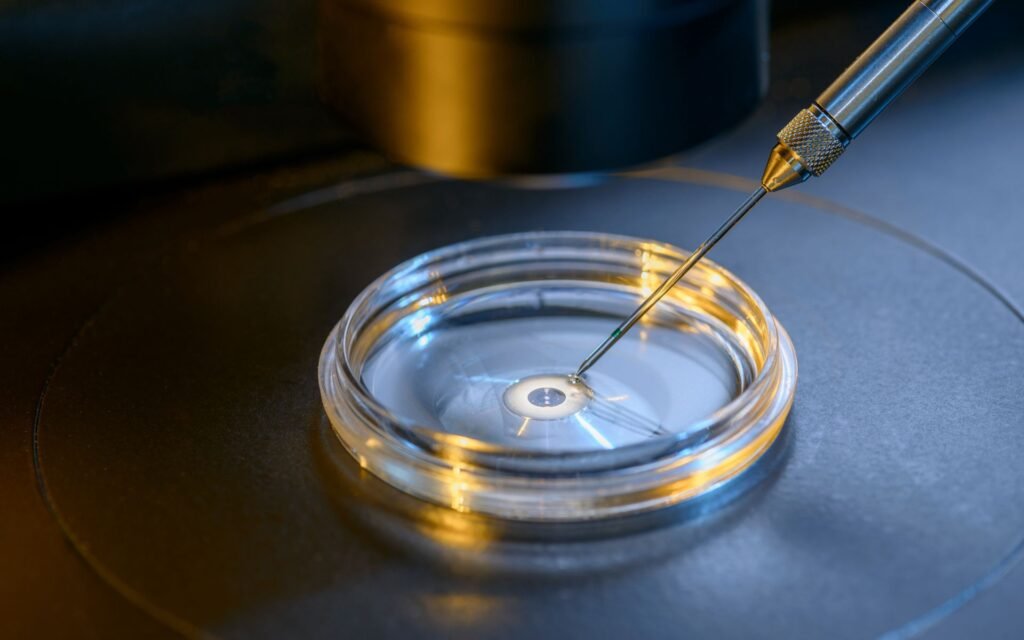
Intracytoplasmic Sperm Injection, known as ICSI, is an advanced laboratory fertilization technique used as part of IVF treatment. In this procedure, an embryologist injects a single selected sperm directly into a mature egg using specialized laboratory equipment.
Unlike conventional IVF, where eggs and sperm are placed together in a laboratory dish, ICSI involves direct sperm injection.
How Does ICSI Work?
ICSI usually follows the initial stages of an IVF cycle. After ovarian stimulation and egg retrieval, mature eggs are identified in the laboratory.
An embryologist selects an individual sperm and injects it directly into a mature egg. The eggs are then monitored to assess fertilization and subsequent embryo development.
If suitable embryos develop, the fertility specialist may recommend embryo transfer or embryo freezing, depending on the treatment plan.
When Is ICSI Recommended?
ICSI may be considered in situations such as:
- Very low sperm count.
- Poor sperm motility.
- Significant sperm morphology concerns.
- Surgically retrieved sperm.
- Previous fertilization problems during IVF.
- Certain cases of male factor infertility.
ICSI is not automatically required for every IVF cycle. The doctor and embryology team decide whether it is appropriate based on sperm quality, previous treatment history, and other clinical factors.
IVF vs IUI vs ICSI: Understanding the Difference
Although IVF, IUI, and ICSI are all associated with fertility treatment, they work differently and are recommended for different circumstances.
IUI involves placing prepared sperm into the uterus, allowing fertilization to occur naturally inside the body.
IVF involves retrieving eggs and fertilizing them with sperm in a laboratory before transferring an embryo into the uterus.
ICSI is a specialized fertilization method used during IVF in which a single sperm is injected directly into a mature egg.
The choice between these treatments depends on several factors, including the female partner’s age, ovarian reserve, fallopian tube condition, sperm quality, duration of infertility, and previous treatment outcomes.
A fertility specialist can explain the advantages, limitations, expected process, and possible risks of each option before treatment begins.
Common Causes of Infertility in Women
Female infertility may be associated with several reproductive health conditions.
PCOS and Irregular Ovulation
Polycystic Ovary Syndrome (PCOS) can affect hormonal balance and ovulation. Women with PCOS may experience irregular periods, infrequent ovulation, and difficulty conceiving. Treatment may involve lifestyle guidance, ovulation management, IUI, or IVF depending on the individual situation.
Blocked Fallopian Tubes
Fallopian tube blockage can prevent sperm and egg from meeting naturally. Previous infections, endometriosis, and pelvic surgery may contribute to tubal damage. IVF may be considered when tubal factors significantly affect conception.
Low Ovarian Reserve
Ovarian reserve refers to the remaining quantity of eggs in the ovaries. Tests such as AMH and antral follicle count can provide information that helps doctors plan fertility treatment. These tests do not independently determine whether pregnancy is possible.
Endometriosis and Fibroids
Endometriosis and certain uterine fibroids may affect reproductive health. Their impact depends on their location, severity, and other fertility factors. A gynecologist or fertility specialist may recommend further investigations and treatment where appropriate.
Common Causes of Male Infertility
Male fertility is an equally important part of pregnancy planning. A semen analysis is commonly used to evaluate sperm concentration, motility, and morphology.
Low sperm count, poor sperm movement, hormonal problems, varicocele, infections, genetic conditions, and reproductive tract obstruction may contribute to male infertility.
In selected cases, treatments such as medical management, ICSI, or surgical sperm retrieval procedures like PESA, TESA, and TESE may be discussed.
Evaluating both partners helps the fertility specialist identify possible causes and select an appropriate treatment approach.
Advanced Fertility Services and Treatment Options
Modern fertility treatment includes several procedures beyond conventional IVF and IUI. Depending on medical requirements, couples may discuss additional options with their fertility specialist.
Egg or oocyte freezing allows eggs to be preserved for future reproductive use. Sperm freezing may be considered before certain medical treatments or when future fertility preservation is desired. Embryo freezing allows suitable embryos created during IVF to be stored for future use.
Other procedures may include blastocyst culture, embryo transfer, single embryo transfer, preimplantation genetic testing (PGT), hysteroscopy, and laparoscopic surgery.
Techniques such as PICSI, IMSI, and microfluidics-based sperm selection may also be considered in selected cases. Not every procedure is necessary for every patient, and the expected benefits should be discussed with the treating specialist.
IVF Treatment Near Barnala: Why Consider a Specialist Consultation?
Couples from Barnala may wish to consult a fertility specialist when pregnancy is taking longer than expected or when medical conditions are affecting reproductive health.
A consultation can help answer important questions about fertility testing, IVF treatment cost, IUI suitability, ICSI indications, treatment duration, and possible outcomes.
Gold Medica IVF in Bathinda offers fertility consultation and assisted reproductive treatment options for couples travelling from Barnala and nearby locations. The center’s services include IVF, IUI, ICSI, fertility preservation, embryo freezing, male infertility evaluation, and related gynecological procedures.
The appropriate treatment depends on individual medical findings. Couples should receive clear information about the proposed procedure, medication, laboratory processes, risks, and financial considerations before starting treatment.
How to Prepare for Your First Fertility Consultation
Before visiting a fertility clinic, couples can organize their previous medical reports and treatment records. Information about menstrual cycles, previous pregnancies, surgeries, medical conditions, and current medications may help the doctor understand their reproductive history.
If semen analysis or hormone tests have already been performed, carrying those reports can help avoid unnecessary repetition. Couples should also prepare questions about the recommended treatment, expected timeline, possible alternatives, and follow-up requirements.
It is important to discuss concerns openly. Fertility treatment is a shared process, and evaluating both partners helps create a more complete understanding of the situation.
Frequently Asked Questions About IVF, IUI and ICSI
1. Which Is Better: IVF or IUI?
Neither treatment is universally better. IUI may be suitable for selected couples with appropriate fertility findings, while IVF may be recommended for conditions such as blocked fallopian tubes or certain forms of severe infertility. The decision depends on individual evaluation.
2. Is ICSI Different From IVF?
ICSI is a fertilization technique performed as part of IVF. In conventional IVF, eggs and sperm are placed together in a laboratory dish. In ICSI, one selected sperm is injected directly into a mature egg.
3. How Long Does IVF Treatment Take?
An IVF cycle commonly takes several weeks from the beginning of ovarian stimulation through egg retrieval and embryo transfer. The exact timeline depends on the treatment protocol and whether a fresh or frozen embryo transfer is planned.
4. Can Couples With Male Infertility Have a Baby Through IVF?
Some couples with male factor infertility may be able to consider IVF with ICSI. The available options depend on sperm production, sperm retrieval possibilities, and the female partner’s fertility assessment.
5. When Should We Visit a Fertility Clinic Near Barnala?
Couples are generally advised to seek evaluation after 12 months of trying to conceive if the woman is under 35, or after six months if she is 35 or older. Earlier assessment is advisable when known fertility concerns or irregular menstrual cycles are present.
6. Does Every Couple Need ICSI During IVF?
No. ICSI is generally considered when specific fertilization concerns exist, particularly in selected cases of male factor infertility or previous fertilization failure. Conventional IVF may be appropriate for other couples.
Consult Gold Medica IVF for Fertility Treatment Near Barnala
Infertility can have different causes, and every couple needs an approach based on their individual reproductive health. Understanding IVF, IUI, and ICSI can help couples make informed decisions about their treatment journey.
For couples searching for a fertility clinic near Barnala, IVF treatment near Barnala, IUI treatment in Punjab, or an IVF and ICSI specialist in Bathinda, Gold Medica IVF offers fertility evaluation and assisted reproductive treatment options.
Led by Dr Preeti Jindal, Gold Medica IVF provides services including IVF, IUI, ICSI, egg freezing, embryo freezing, fertility preservation, male infertility treatment, and gynecological care.
Couples from Barnala can explore consultation options at Gold Medica IVF, Bathinda, to discuss their fertility concerns and understand the treatment options that may be suitable for them.